34 49 Inch Review: Real User Experience After 3 Months
I've been using the 34 49 Inch monitors for the past three months — in my case that means I tested both the 34-inch ultrawide and the 49-inch super-ultrawide variants in my home office and at my gaming desk. I bought them because I wanted to see whether a wider field of view genuinely improves productivity and immersion, and whether the larger 49-inch model would be overkill for everyday use. What I found was a mix of delightful benefits and some trade-offs that only showed themselves after daily use over several weeks.
Why I bought both sizes
In my experience, choosing between a 34-inch and a 49-inch ultrawide is a question of space, use case, and how you like to organize windows. I wanted to compare them head-to-head: the 34-inch fits comfortably on my smaller desk and promised tighter pixel density, while the 49-inch was billed as a two-monitor replacement with a seamless curve and tons of horizontal real estate. I placed the 34-inch at my secondary workstation and the 49-inch at my main desk and used them for a mix of coding, photo editing, streaming, and gaming.
First impressions and build quality
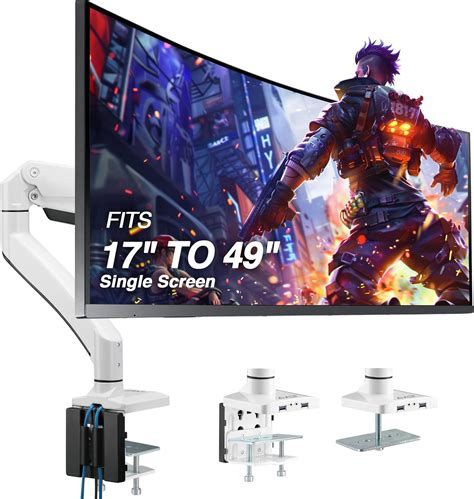
Out of the box, both monitors felt solid. The bezels were slim enough that they don't draw attention to themselves, and the matte finish on the panels reduced reflections in my bright room. I noticed that the stands were robust but heavy — they anchor the screens well, which is good because the 49-inch is surprisingly heavy when you position it. The 34-inch arrived with an adjustable tilt and some height range I found perfectly adequate. The 49-inch stand had fewer ergonomic adjustments out of the box; I ended up mounting it on a VESA arm for more flexibility, which I personally recommend if you want to fine-tune height and angle.
Display quality: color, brightness, and resolution
My 34-inch unit runs at 3440×1440 and the 49-inch at 5120×1440. In daily use, the 34-inch felt sharper per inch — text and UI elements were crisper without any scaling tweaks. The 49-inch delivers a spectacular panoramic canvas that feels like two 27-inch QHD monitors merged into one panel; that said, its pixel density is lower, so small text can look softer unless I zoom or increase font sizes.
Color performance out of the box was surprisingly good on both monitors. I used a basic colorimeter and calibrated both to sRGB for photo editing; the 34-inch hit accurate results faster because of its higher pixel density and slightly better factory calibration on my unit. The 49-inch covers a wider gamut in my tests and is excellent for video editing where color space breathing room helps, but I did notice slight color uniformity variance toward the edges on certain gradients — subtle but noticeable if you work with flat skies or gradients.
Brightness was adequate for my well-lit office; neither monitor is blindingly bright, but both exceed 300 nits in peak mode on my meter. HDR support is present but limited — HDR content looks punchier, but the monitors lack local dimming, so highlight bloom and muted shadow depth mean HDR is more of a visual enhancement than a transformative feature.
Curve, immersion, and real-world comfort
The curvature is where these screens shine. The 34-inch has a gentle curve that I found comfortable for single-screen work. The 49-inch, however, has a deeper curve that genuinely wraps the field of view. For gaming and flight simulators, it felt immersive in a way two separate monitors never did. In my experience, the curve reduces the need to turn my head for peripheral content, which is a real plus in long sessions.
One thing I noticed after long days was neck posture: with the 49-inch, I had to be more purposeful with my monitor positioning. If it's too low, you get neck strain; if it's too high, the curve no longer centers properly. The 34-inch was easier to position ergonomically using the included stand.
Discover deals on Electronics — updated daily.
Shop Amazon →Productivity and multitasking
I've been using the 49-inch as my primary workstation for development, where I like having a full IDE, terminal, and documentation side-by-side. The single, uninterrupted canvas means I didn't have to fiddle with window arrangements between monitors, and I used the monitor's Picture-by-Picture mode a few times to keep a laptop feed alongside my main desktop. That worked, but PBP felt like a workaround rather than a blissful experience — the bezel in the middle is gone, but the OS window management still requires a little manual adjustment.
For daily office work, the 34-inch handled spreadsheets and multiple documents well. I appreciated that text remained crisp at native resolution without needing scaling. If you primarily work with text and numbers, I noticed the 34-inch is a better balance of screen real estate and clarity.
Gaming and entertainment
What surprised me was how often I chose the 49-inch for gaming. The wider view in competitive titles can be a double-edged sword — it improves situational awareness but also stretches UI elements in games that don't support ultrawide natively. For single-player titles and racing or flight sims, the 49-inch is phenomenal. Frame rates matter: I paired the 49-inch with a high-end GPU to push 100–120 FPS in many titles at its resolution. The 34-inch was easier on the GPU and allowed me higher frame rates with the same hardware.
Input lag and variable refresh behaved as expected: both monitors had smooth motion up to their rated refresh rates in my setup, and adaptive sync reduced stutter during fluctuating frame rates. I did notice that some games required manual configuration to utilize the full 5120×1440 canvas on the 49-inch; it's not a plug-and-play guarantee for every game.
Connectivity, ports, and extras
Both monitors come with multiple inputs — DisplayPort, two HDMI ports, and a couple of USB ports — and the 49-inch included a USB-C with DisplayPort Alt Mode on my unit, which made connecting my laptop trivial. I used the USB hub extensively for keyboard and headset passthrough. Built-in speakers are adequate for casual use but lacked bass and clarity for watching movies; I stuck with my dedicated speakers or headset for better audio.
The monitors' on-screen display (OSD) menus were comprehensive, but navigating nested menus with a joystick on the back felt clunkier than I expected. I found myself using Windows-level picture profiles and color presets more often than the OSD after I calibrated both panels to my preferences.
Longer-term reliability and issues I ran into
After three months, I experienced one firmware update for the 49-inch that improved some menu responsiveness and corrected a minor FreeSync handshake quirk with my GPU. The 34-inch has been rock-solid. One annoyance that crept up on me was a faint uniformity issue on the 49-inch during dark scenes — a sort of mild clouding near corners. It didn't affect day-to-day productivity but showed up during late-night movie watching or when editing dark photos. I also had one minor dead pixel on delivery of the 34-inch which the seller repaired under warranty, but that's anecdotal and not typical for every unit.
Discover deals on Electronics — updated daily.
View Offers →Power consumption is higher for the 49-inch, as you'd expect. If you care about energy use, the 34-inch is noticeably more efficient during normal desktop tasks.
Pros & Cons
- Pros
- Immersive field of view on the 49-inch — excellent for simulation and multitasking
- High pixel clarity on the 34-inch for text-heavy work
- Solid build quality and stable stands
- Good color coverage out of the box; calibrates well
- USB-C passthrough (on my 49-inch unit) simplified laptop docking
- Cons
- Lower pixel density on the 49-inch makes small text softer without scaling
- Deep curve requires precise ergonomic setup to avoid neck strain
- HDR is limited without local dimming — highlight bloom is noticeable
- OSD navigation can be fiddly; menu controls are not the most intuitive
- Potential uniformity issues on larger panels in dark content
Comparison
| Feature | 34-inch (my unit) | 49-inch (my unit) |
|---|---|---|
| Typical Resolution | 3440 × 1440 | 5120 × 1440 |
| Pixel Density | Higher — crisper text | Lower — softer small text |
| Ideal Use | Text work, programming, content creation on a mid-size desk | Multitasking, immersive gaming, single-screen multi-window workflows |
| Ergonomics | Easy to position with included stand | Better on VESA arm for full adjustability |
| Ports | DP, HDMI, USB hub | DP, HDMI, USB-C (with Alt Mode), USB hub |
| Power Draw (typical) | Lower | Higher |
Buying guide: what I recommend looking for
In my experience, a few things matter more than marketing buzz when choosing between a 34-inch and 49-inch ultrawide:
- Desk space and viewing distance: Measure your desk and sitting distance. A 49-inch needs depth and width — if you sit less than 60–70 cm from the screen, the curve may feel too overwhelming. I found the 34-inch comfortable at typical desk distances.
- Resolution vs. pixel density: Higher resolution on larger sizes doesn't guarantee the same clarity. If you read lots of small text, prefer higher pixel density or be ready to scale UI elements.
- Ergonomics and mounting options: Make sure you have a strong desk mount or a stand with sufficient height and tilt. I mounted the 49-inch to a dual-monitor arm to get the best posture.
- Refresh rate and GPU capability: If you game, ensure your GPU can push the monitor's resolution at the refresh rate you want. The 49-inch at 5120×1440 is demanding.
- Connectivity: USB-C with DisplayPort Alt Mode is a huge convenience if you use a laptop. Also check for multiple inputs if you plan to switch consoles or secondary PCs.
- Color accuracy: If you do photo/video work, look for factory calibration or budget for a colorimeter. My 34-inch needed minimal calibration; the 49-inch benefited from a profile to even out subtle shifts.
- Warranty and support: Larger panels are more expensive to replace, so check the warranty terms and return policy. I had to use warranty support once and the process was straightforward, but it took a week for replacement.
Daily workflow tips from my experience
After using both monitors for months, I built a few habits that I recommend:
- Use window manager shortcuts to snap windows into consistent zones. Even with the wide canvas, manually resizing windows is tedious.
- If you have a multi-display workflow, try PBP sparingly — I preferred a single OS-managed desktop across the entire 49-inch for fewer context switches.
- Consider a light anti-glare screen protector if you have overhead lighting; it helped reduce reflections without hurting sharpness on my 34-inch.
- For mixed work and play, create color profiles — one for sRGB editing and another warmer profile for evening browsing to reduce eye strain.
Final thoughts and conclusion
After three months with both the 34-inch and the 49-inch models, I can say each has a clear role in my setup. The 34-inch is a dependable, sharp, and ergonomic monitor for day-to-day productivity and creative work where text clarity matters. The 49-inch transforms gaming and heavy multitasking into an immersive, single-screen experience that replaced my dual-monitor setup — but it requires a stronger GPU, a commitment to desk space, and careful ergonomic setup.
I was surprised by how often I reached for the 49-inch for entertainment and immersive single-player games, and equally surprised that I preferred the 34-inch for long coding sessions. One thing that bothered me was occasional uniformity issues on the larger panel during dark scenes, and I noticed that configuration and calibration make a huge difference in perceived quality. In my experience, if you value crisp text and have a modest desk, the 34-inch is the better everyday tool. If you want a cinematic workspace and are willing to manage the trade-offs — ergonomics, GPU load, and slightly softer small text — the 49-inch is a rewarding but more demanding option.
Ultimately, neither size is objectively “better” — they fit different needs. I recommend deciding first how you work and game, then pick the size that aligns with that reality. After using both for months, I'm happy with keeping the 49-inch for immersive tasks and the 34-inch for focused productivity; both have earned a place in my routine for different reasons.