Ear Stick Truly Wireless Review: Real User Experience After 3 Months
The Search for the Perfect "Open" Fit
For the longest time, I felt like a bit of an outcast in the modern audio world. While everyone else was raving about Active Noise Cancellation (ANC) and the deep, pressurized seal of silicone ear tips, I was struggling. My ear canals are apparently shaped in a way where most "in-ear" buds either cause physical pain after twenty minutes or simply slide out the moment I start walking. I missed the days when earbuds sat comfortably in the outer bowl of the ear without feeling like they were trying to perform a medical procedure on my eardrums.
Three months ago, I finally decided to pick up the Ear Stick Truly Wireless. I had seen the striking designs and the unique "lipstick" case, but I was skeptical. Was this just a fashion statement, or could it actually serve as my daily driver for podcasts, work calls, and the occasional gym session? After ninety days of continuous use, having carried them through rainy commutes, long office hours, and quiet evenings at home, I have a very clear picture of where these buds shine and exactly where they fall short.
My journey with these started out of a desperate need for transparency—not the artificial "transparency mode" created by microphones, but the natural ability to hear the world around me. I live in a busy city, and frankly, I don't always want to be isolated. I want to hear the cyclist ringing their bell behind me or the barista calling my name without having to toggle a button. After twelve weeks, here is my honest take on whether the Ear Stick holds up to the rigors of real life.
Unboxing and the First Impression: Style Over Substance?
When I first held the cylindrical case, I was immediately struck by the tactile experience. Most wireless earbud cases involve a flip-top lid that can sometimes feel flimsy. The Ear Stick uses a rotating mechanism. I found myself "fidget-spinning" the case in my pocket more often than I’d like to admit. It feels premium and mechanical. However, within the first week, I noticed a specific reality of this design: the clear plastic shows every single speck of dust. If you carry these in a pocket with denim lint or crumbs, the transparent shell acts like a display case for that debris.
One thing I found was that the case is quite long. While it’s slim, it doesn't always sit flat in a pocket alongside a smartphone. I eventually learned to keep them in my jacket pocket or the small coin pocket of my jeans. The earbuds themselves are incredibly light. Coming from a pair of heavy noise-canceling buds, the Ear Stick felt almost like nothing when I first put them in. This lightness is their greatest strength, but it also led to several "phantom ear" moments where I had to reach up and check if they were still there.
The Nine-to-Five Workflow: Connection and Comfort
For the first month, I used these primarily for work. My office is a mix of quiet focus time and sudden Zoom meetings. In my experience, the multi-point connection—or lack thereof—was one of the first hurdles. I had to get used to manually switching my connection between my laptop and my phone. While the pairing process is fast, it isn't as seamless as some higher-priced competitors. But once connected, the stability was impressive. I’ve walked to the office kitchen, leaving my phone at my desk, and didn’t experience a single drop-out through two sets of drywall.
After testing for hours during long-form data entry sessions, I realized I could wear these for an entire four-hour block without any "ear fatigue." This was a revelation for me. Because they don't use silicone tips to plug the canal, there is no pressure buildup. I noticed that my ears didn't get itchy or sweaty, which is a common complaint I have with traditional earbuds. If you are someone who works in an environment where you need to be reachable by colleagues, the "open" nature of the Ear Stick is a game changer. I could have a conversation with a teammate while my music was at 20% volume without ever taking the buds out.
Sound Quality Breakdown: A Different Kind of Audio
Let’s talk about the sound, because this is where the Ear Stick is most polarizing. In my experience, if you are a "bass-head" who wants to feel the sub-bass rattling your skull, you will be disappointed. Because there is no seal, physics dictates that the low-end performance will be leaner. However, I was surprised by how much Nothing (the manufacturer) managed to squeeze out of these 12.6mm drivers. What I found was a very crisp, mid-forward sound signature that is absolutely perfect for spoken word content.
I listen to about ten hours of podcasts a week. For that specific use case, the Ear Stick is superior to many "better" sounding buds. Voices are clear, distinct, and lack the "muffled" quality you sometimes get with deep-insertion buds. When it comes to music, acoustic tracks, jazz, and folk sound wonderful. I noticed that the soundstage feels remarkably wide. Because the sound isn't being pumped into a closed chamber (your ear canal), it feels like the music is floating just outside your head rather than inside it.
Looking for the best Audio & Headphones deals on Amazon?
View Offers →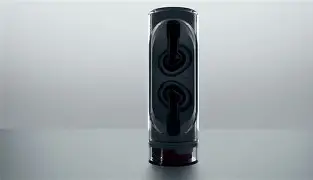
One thing that bothered me, however, was using them in loud environments. After testing them on a city bus, I realized that the lack of isolation is a double-edged sword. To hear my music over the engine roar, I had to crank the volume to about 80%. At that level, there is significant "sound leakage." The person sitting next to me could definitely hear my 80s synth-pop playlist. This is not the pair of headphones you take on a ten-hour flight if you want to sleep in silence.
Battery Life and Charging Reality
After three months, the battery health seems to be holding up well. I typically get about 6.5 to 7 hours of listening time on a single charge. The case provides several more refills, usually lasting me a full work week before I need to plug the cylindrical case into a USB-C cable. I did notice that there is no wireless charging. In the first few weeks, I kept placing the case on my Qi charging pad out of habit, only to realize later that it was still at 10%. It’s a minor inconvenience, but for a product that leans so heavily on "tech-forward" design, it felt like a missing piece of the puzzle.
Outdoor Performance and Durability
I’ve taken these on several runs and long walks. I was initially worried that the "loose" fit would mean they’d fly out if I hit a pothole or turned my head quickly. To my surprise, they stay put. There is a specific ridge in the design that hooks into the anti-tragus of the ear. I’ve never had one fall out, even when sweating. Speaking of sweat, they have an IP54 rating. I’ve worn them in light rain showers, and while the case stayed in my bag, the buds themselves handled the moisture without glitching.
What I found frustrating was the "press" controls. The Ear Stick uses a physical pinch mechanism on the stems rather than touch sensitive pads. On one hand, this prevents accidental triggers when you’re adjusting the fit. On the other hand, after three months, I find that pinching the stem sometimes slightly dislodges the bud from its optimal "sweet spot" for sound. It takes a certain finesse to click the stem without moving the earbud itself.
Comparison: How It Stands Against the Competition
To give you a better idea of where the Ear Stick sits in the market, I’ve put together this table based on my personal experience with other popular "half-in-ear" or "open" style earbuds on the market.
| Feature | Ear Stick | Standard Open-Fit Buds | Premium Pro In-Ear Buds |
|---|---|---|---|
| Fit Style | Half-open (No tips) | Traditional "Hang" style | In-ear (Silicone seal) |
| Long-term Comfort | Exceptional (4+ hours) | Good (2-3 hours) | Moderate (1-2 hours) |
| Bass Performance | Clean but Lean | Weak/Tinny | Powerful/Heavy |
| Ambient Awareness | Natural/Total | High | Artificial (Transparency) |
| Portability | Slim Cylinder | Pocket Square | Bulky Case |
| Controls | Pinch/Press | Touch tap | Touch or Pinch |
The Pros and Cons: A 90-Day Summary
After living with these for a full quarter of a year, I can boil the experience down to these specific points. These aren't based on a spec sheet, but on what it actually feels like to have them in your ears every day.
- Pros:
- Unrivaled comfort for people who hate silicone ear tips; I truly forget I’m wearing them.
- The "Natural Transparency" is perfect for office workers, parents, or city walkers who need to stay alert.
- Microphone quality is surprisingly good; I’ve taken dozens of calls on windy streets and nobody complained about my voice quality.
- The design is a genuine conversation starter and feels more like a piece of jewelry or a tech gadget than a generic plastic tool.
- App support is solid, allowing for custom Equalizer (EQ) settings that actually help boost the bass a bit.
- Cons:
- Total lack of sound isolation; you will hear everything happening around you, for better or worse.
- Sound leakage is high at volumes above 60%, making them less ideal for quiet libraries or crowded elevators.
- The case design, while beautiful, easily collects dust and debris inside the clear rotating mechanism.
- No wireless charging and no multi-point connection (at least not in a way that feels seamless).
- Deep sub-bass is physically impossible with this design, so EDM and Hip-Hop lack that "thump."
Analysis of the Software Experience
One aspect I didn't expect to appreciate as much was the companion app. In my experience, most earbud apps are "set it and forget it." With the Ear Stick, I found myself going back to the custom EQ frequently. Because the buds have a "More Bass" setting, I tried to leave it on permanently. What I found was that while it helps, it can sometimes muddy the vocals. I eventually settled on a "Balanced" profile for podcasts and a "Custom" profile where I boosted the 100Hz range manually for my music. The app also allows you to customize the pinch gestures, which I used to disable the "Triple Pinch" because I kept accidentally triggering it when I only wanted to skip a track.
I also noticed that firmware updates are relatively frequent. In the three months I’ve owned them, I’ve received two updates. One specifically seemed to improve the "In-ear detection," which was a bit finicky during the first month. It used to pause my music if I just tilted my head too far to the left, but after the most recent update, it’s much more consistent.
Looking for the best Audio & Headphones deals on Amazon?
Shop Amazon →A Real Owner’s Buying Guide: Who Are These For?
If you are looking at the Ear Stick, you need to ask yourself one very important question: What is my primary listening environment?
If you are a frequent traveler who spends a lot of time on planes or subways, I would honestly tell you to look elsewhere. The Ear Stick will lose the battle against a jet engine every single time. You will end up turning the volume up to dangerous levels just to hear your movie dialogue. However, if you are a "home office" worker, a runner who wants to stay safe, or someone who finds silicone tips painful, these are arguably the best option on the market.
When buying, I noticed that the color options are limited but striking. The white model I have is beautiful, but the red accents on the "Left" and "Right" indicators are functional too. It sounds like a small detail, but in a dark room, being able to quickly identify which bud goes in which ear based on a color dot is a design win I appreciated every single night.
Furthermore, consider your device ecosystem. While these work with iPhones, they feel more tightly integrated with Android devices, offering "Fast Pair" which makes the initial setup a five-second process. If you have a phone from the same manufacturer, you get some extra "hidden" features in the notification shade, but for my use with a standard Android device, the app was more than sufficient.
Final Thoughts After 3 Months
In conclusion, my time with the Ear Stick Truly Wireless has changed my perspective on what "high-quality audio" means. It isn't always about the highest bitrate or the deepest isolation. Sometimes, the best audio experience is the one that fits into your life without causing physical discomfort or social isolation. I’ve found that I reach for these over my expensive over-ear headphones about 80% of the time, simply because they are so easy to live with.
I was surprised by how much I valued the ability to hear my own voice naturally during phone calls—there’s none of that "talking with your ears plugged" sensation where your own voice sounds like it's vibrating inside your skull. While I am still disappointed by the lack of wireless charging and the way the case attracts lint, those are trade-offs I am willing to make for the sheer comfort they provide.
After testing for ninety days, the Ear Stick hasn't replaced my specialized gym buds or my heavy-duty noise-canceling cans for travel, but it has become the definitive "soundtrack to my daily life." They are the buds I grab when I’m walking the dog, the buds I use for my morning stand-up meetings, and the buds I wear when I’m cooking dinner and need to hear the timer go off. If you go into the purchase with your eyes open regarding the lack of bass and isolation, I think you’ll find them as refreshing as I did. They aren't trying to be like every other pair of buds on the market, and in a world of clones, that’s something I’ve grown to truly admire.